Do Not Let Storage Start on Sorting Day
Storage problems often begin before anything is placed in storage. A bulb may be lifted too wet, sorted too late, handled too roughly, or left in a spot where airflow is uneven. By the time the crop is in boxes or baskets, many of the useful decisions have already passed.
A better storage habit starts while the crop is still being read in the field. The question is not only whether the crop is big enough to take. It is whether the crop is dry enough, clean enough, and even enough to move into the next stage without bringing hidden trouble along.
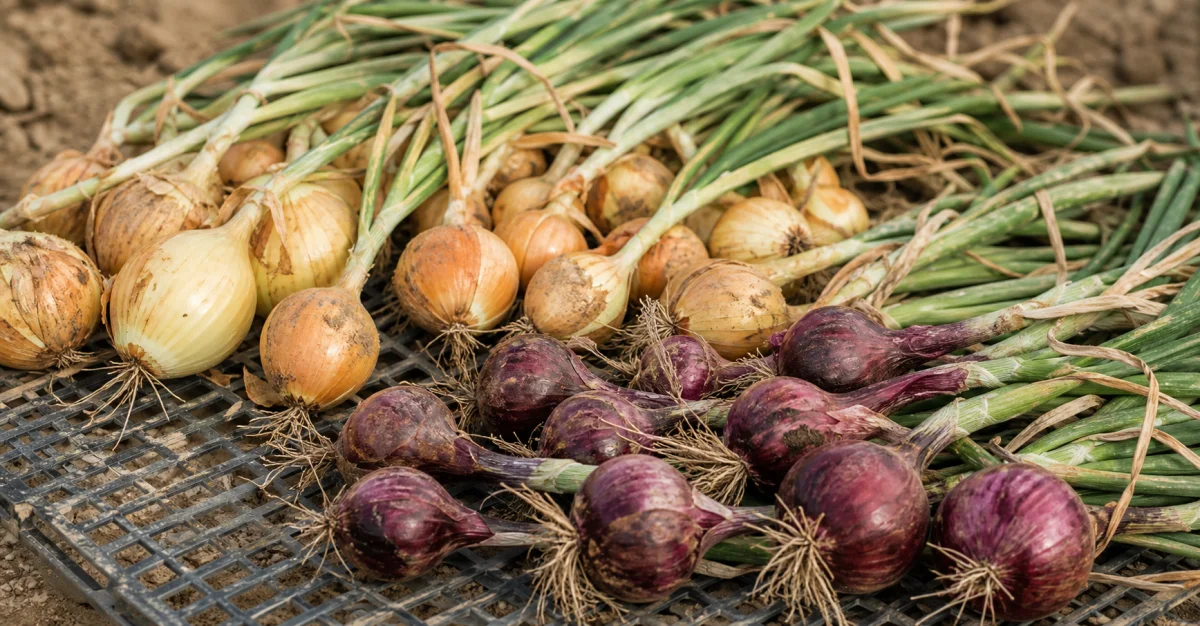
Check the crop before lifting everything
A small harvest sample can show whether the crop is ready for the next step. It may reveal soft necks, uneven size, wet soil clinging to roots, or sections that need more drying time. Those details are easier to handle before the whole crop is lifted.
This connects with the Blogger note on picking one sample before the whole row. A sample is not just about size. It can also show whether the crop is ready to cure and store.
Let curing do real work
Curing is not a waiting period with no purpose. It is the step that helps skins tighten, necks dry, and weak bulbs show themselves before they are mixed with the better crop. If curing is rushed, storage becomes a guessing game.
For onions, the details matter because lifting, airflow, top condition, and early sorting all shape how well bulbs hold. The guide on onion harvest, curing, and storage checks gives a practical frame for treating curing as part of the harvest decision.
Do not carry field moisture into storage
Moisture does not become harmless just because the crop has been harvested. If a low section stayed wet, if a row dried unevenly, or if the crop was lifted after a heavy correction, the storage plan needs to account for that difference.
The earlier post on checking the low spot after watering fits this stage well. Slow-drying sections often deserve separate handling instead of being blended with the cleanest part of the crop.
Start dry-down before the leaves finish the story
Garlic and other bulb crops can look almost finished while the final dry-down is still shaping quality. If watering, scape growth, bulb filling, and leaf fade are treated as separate events, the grower may miss the transition from growing to preparing for harvest.
The main guide on garlic water timing and bulb bulking is useful because it ties water decisions to the stage before leaves fully fade. That timing affects how cleanly the crop moves toward curing.
Sort before the crop disappears into containers
Sorting should happen while differences are still visible. Damaged bulbs, soft spots, thick necks, and uneven drying are easier to notice in the open than after everything is stacked. The goal is not to create a perfect crop. It is to keep weaker pieces from hiding among the ones that should store longer.
This is also why reading the crop before harvest week matters. Storage quality is easier to protect when harvest timing, field condition, and sorting are part of the same decision.
Reset the area after the first pass
After the first harvest pass, the bed or field edge should be easier to read, not more confusing. Remove obvious waste, keep curing areas open to air, and write one short note about which section dried well and which section needs watching.
The earlier note on resetting the next round after the first harvest is a good companion here. The storage plan improves when the harvest area is left clean enough for the next decision.
Storage is not a single final step. It is the result of several small decisions made before, during, and just after harvest. When curing and sorting begin early, the stored crop carries fewer surprises with it.

Comments
Post a Comment