Give Transplants a Quiet Week Before You Judge Them
The first week after transplanting is easy to misread. A plant may lean, pause, soften in the afternoon, or look smaller than the seedling next to it. Those signs matter, but they do not always mean the planting failed. Often, the crop is simply shifting from tray life to bed life.
A useful transplant check is not a daily verdict. It is a slow comparison of root contact, leaf recovery, bed moisture, and new growth. If those pieces are watched in order, the grower can avoid two common mistakes: pushing the plant too hard too soon, or replacing a seedling that only needed time to settle.
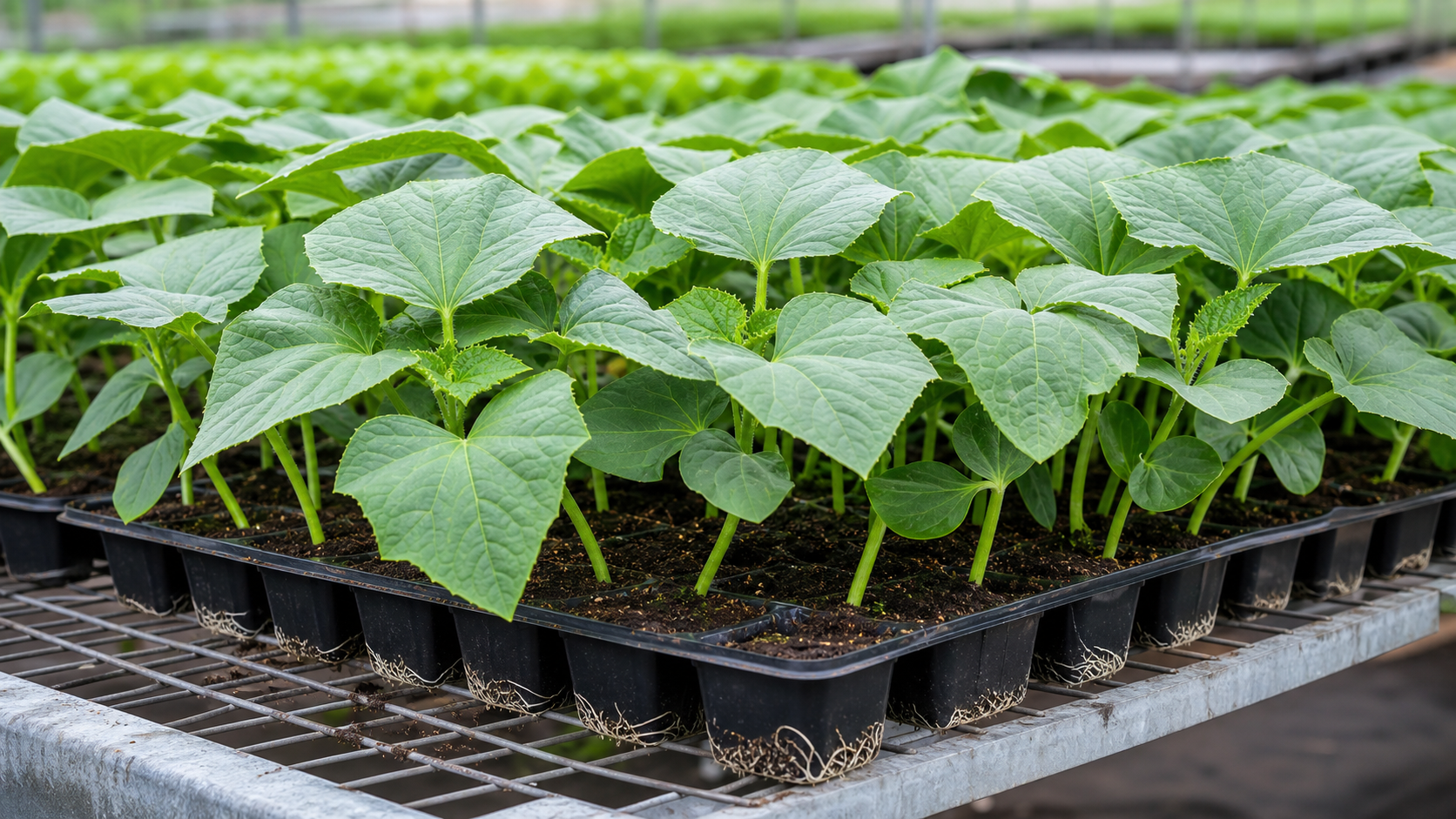
Start with contact, not height
Height is a poor first-week measure. A tall seedling can still have weak contact with the bed, while a shorter one may already be holding steady. The first question is whether the root ball is sitting firmly in moist soil without an air pocket around it.
This is especially important for cucumbers because the vine can begin asking for support before the roots have fully settled. The practical guide to cucumber seedling root recovery is a useful reference when deciding whether to wait, firm the soil, or delay early training.
Read recovery at the same time each day
Transplants often look weakest during the warmest part of the day. If every check happens then, the crop may seem worse than it really is. A better habit is to look once during a cooler period and compare the same section again later.
That rhythm fits the earlier note on checking plants before heat gives the wrong answer. The point is not to ignore afternoon stress. It is to learn whether the plant recovers when the pressure eases.
Do not rush the second correction
The first correction after transplanting is usually simple: settle the root zone, keep moisture even, reduce avoidable stress, and leave the plant alone long enough to respond. Trouble often starts with the second correction. Extra water, extra feeding, extra pruning, or quick replacement can make the first week noisier than it needs to be.
Eggplant is a good example because it may pause before it shows confident new leaves. The page on eggplant seedling and transplant recovery gives a helpful frame for separating root readiness from surface appearance.
Keep the notes small
A transplant note does not need to be long. Three short marks are enough: morning recovery, soil feel near the root zone, and whether new growth has started. If the same seedling looks weak in every check, the issue is more stable. If it improves in the cool hours and only softens briefly, the response can be slower.
This is where a simple growing log earns its place. The post on keeping small growing decisions visible works well for transplant week because small notes prevent one hot afternoon from becoming the whole story.
Judge the group, then the individual
Before blaming one plant, compare it with the row or bed around it. If every seedling near one edge is slow, the cause may be moisture, wind, shade, or soil preparation. If only one plant is lagging, the root ball may have been damaged or set poorly. Group patterns make the next step clearer.
The same idea applies to watering. A transplant does not need water because the clock says so; it needs a check that connects moisture with recovery. The earlier article on watering as a timing decision is a good companion for this part of the week.
By the end of a quiet week, the crop usually tells a cleaner story. Some plants will be ready for support, some will need a small adjustment, and a few may truly need replacing. The difference is that the decision comes from a pattern, not from the first uneasy look after transplanting.
Comments
Post a Comment