Read the Crop Before Harvest Week
Harvest planning often becomes rushed because the crop looks almost ready from a distance. Leaves fade, husks dry, vines slow down, or heads turn color, and it is tempting to treat those signs as a final answer. In practice, the last week before harvest is usually when the crop needs closer reading, not less attention.
A useful harvest check looks at the part being harvested, the support around it, and the weather that may change the decision. The same field can contain ready plants, borderline plants, and plants that should be left alone a little longer. A calm walk through the crop can prevent a lot of sorting problems later.
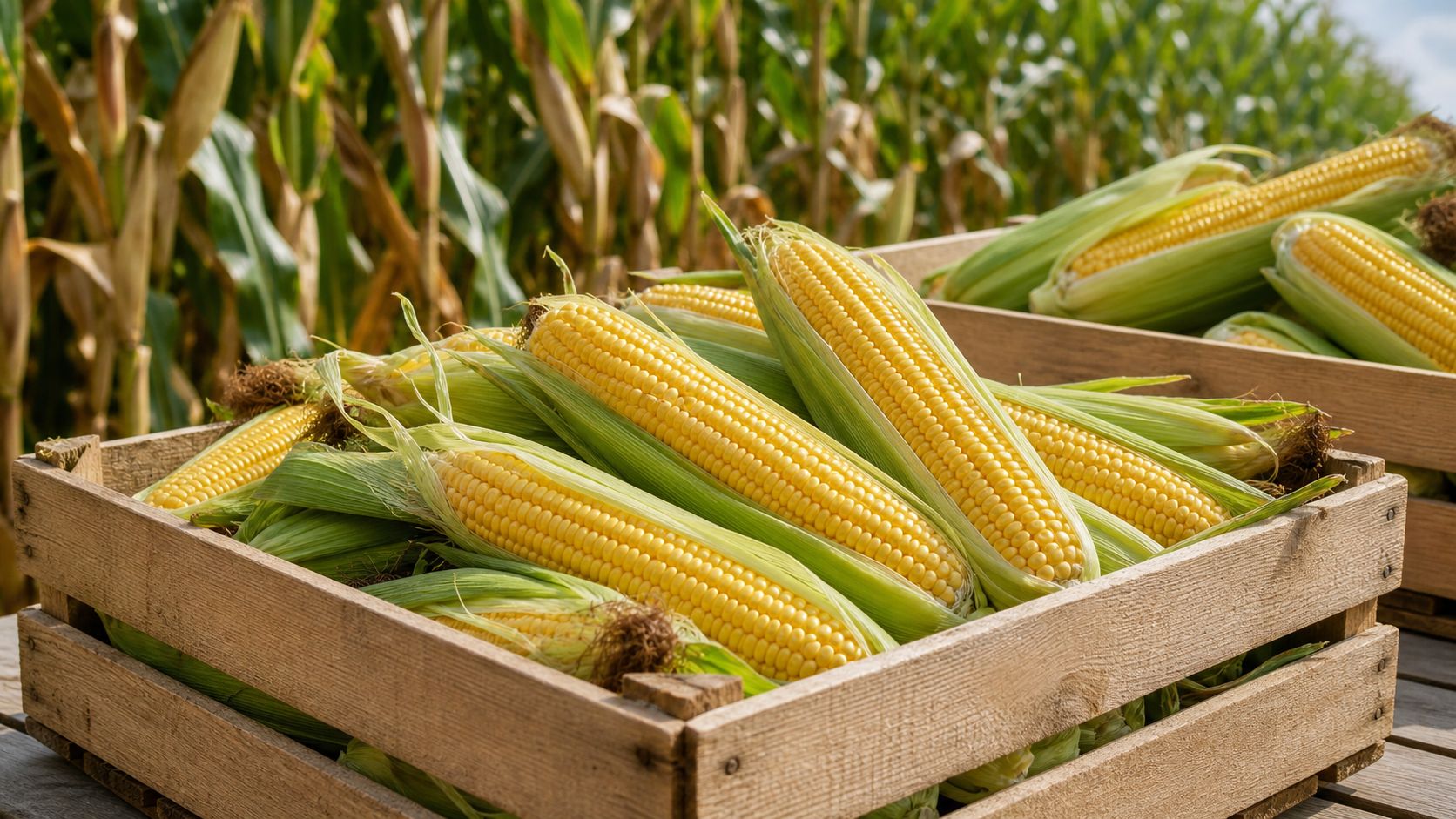
Dry-looking crops may still need a maturity check
Color is helpful, but it should not be the only signal. Corn can look mature from the road while kernel moisture, ear position, and lodging risk still vary across the field. A few sample ears tell more than a quick look at dry husks.
When corn is being harvested for different uses, the decision changes again. Fresh use, drying, storage, and sorting do not all need the same timing. The corn harvest timing guide gives a deeper look at kernel maturity, moisture, husk signals, and late-season sorting.
Stand strength matters near the finish
Some crops reveal their hidden problems late. Wheat may fill grain well for a while, then show lodging risk when wind, rain, or heavy heads test the stand. Waiting for the whole field to look uniformly yellow can miss the moment when harvest timing becomes a risk decision.
For this kind of crop, the question is not only whether grain is ready. It is also whether the stand can keep holding until the planned harvest date. A focused note on wheat grain fill and lodging risk is useful when the crop looks close but the field still needs checking.
Roots and tubers need a different kind of reading
Root and tuber crops are harder to judge from the surface. Vines may look healthy while the ridge is losing shape, soil moisture is uneven, or tuber size is not where the grower expects it to be. A small trial dig can be more useful than guessing from vine color.
Potatoes are a clear example. The ridge, moisture pattern, tuber size, and skin condition all help decide whether to wait, test again, or prepare for harvest. The potato ridge and trial dig guide explains why harvest decisions should start before the final digging day.
Harvest notes should connect back to planting choices
The easiest harvests are often built earlier in the season. Row spacing, crop choice, sowing batches, support, and access paths all shape how well the crop can be checked near the end. If the growing space is small, the first planning decision can make harvest week either simple or frustrating.
That is why the earlier note on what to grow when garden space is limited pairs well with harvest planning. A crop that fits the space is easier to observe, easier to pick on time, and easier to clear when the next round needs room.
A good final walk is not complicated. Check several spots, compare the strongest and weakest plants, look for weather pressure, and decide what should be harvested now versus what can wait. That small habit often matters more than a fixed calendar date.

Comments
Post a Comment