Vine Crops Need Access Before They Need More Growth
Vine crops can make a garden or field look productive very quickly. Leaves spread, tendrils climb, flowers appear, and the planting starts to feel full. That early growth is encouraging, but it can also hide the crop from the person who needs to manage it.
The question is not only whether the vine is growing. It is whether the grower can still see flowers, check fruit position, remove crowded growth, water evenly, and harvest without damaging the plant. A vine that cannot be reached is harder to manage even when it looks strong.
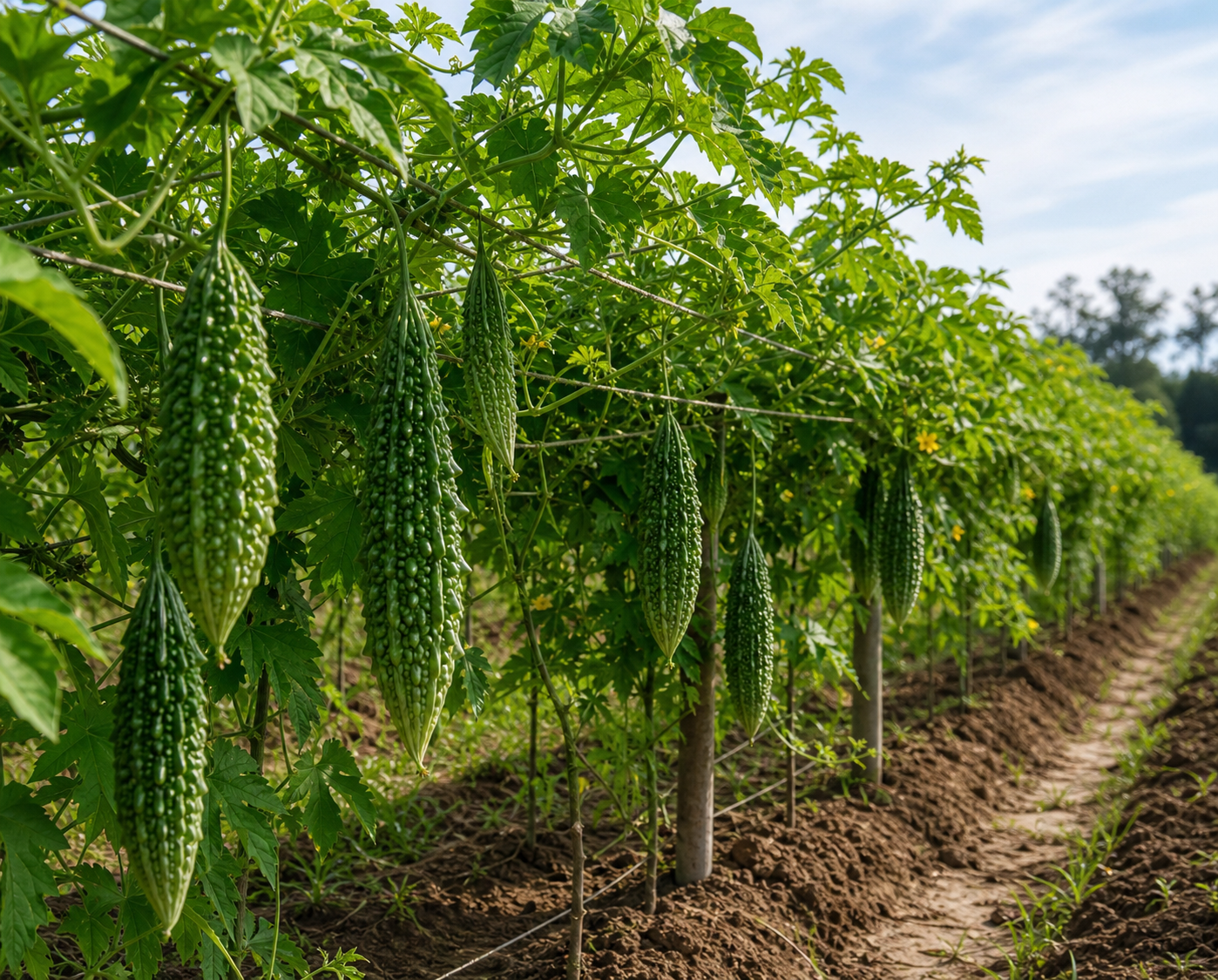
A trellis is also a work path
Many trellises are built to hold vines upright, but support is only one part of the job. The structure also decides whether leaves dry after rain, whether fruit can be seen, and whether harvest can happen without tearing stems. Dense growth may look impressive while making the crop harder to read.
Bitter melon shows this clearly because fruit can hide quickly inside a heavy canopy. If picking is repeated over time, the trellis needs airflow and access, not only height. The bitter melon trellis guide is a useful deeper reference for thinking about canopy density, water rhythm, and harvest access together.
Flower checks need reachable vines
Flowering is another point where access matters. A vine can produce many flowers, but the grower still needs to see which flowers are opening, whether pollination is happening, and whether fruit load is becoming uneven. If laterals are buried in leaves, small problems are noticed late.
Passion fruit is a good example because a full trellis is not automatically an easy trellis. Flower visibility, pollination access, fruit load, and harvest checks all become easier when the vine is trained with future work in mind. The passion fruit flower and harvest guide explains why reachable growth matters after flowering begins.
Ground vines need fruit decisions early
Not every vine climbs. Ground-running vines have a different access problem: fruit can sit in poor positions, become crowded by later growth, or stay in spots that are awkward to inspect. Waiting until the fruit is large makes the decision harder.
Watermelon planning often comes down to position, moisture rhythm, vine load, and harvest quality. A fruit that sets in the wrong place may be harder to protect, check, or harvest cleanly. The watermelon fruit set guide is helpful when deciding which fruit to keep and how to think about vine load.
Growth control connects to watering and harvest notes
Vine access also changes watering decisions. Dense canopies can hide dry spots, slow airflow, or make it harder to see whether the plant is responding to the last irrigation. That is why the earlier note on watering as a timing decision fits naturally with vine management.
The same is true at the end of the crop. If fruit is hidden or paths are blocked, harvest timing becomes guesswork. The note on reading the crop before harvest week is a useful companion because vines, grains, roots, and fruit trees all need observation before the final decision. In a smaller garden, the earlier discussion of choosing crops for limited space can also help decide whether a vine crop really has enough room to be managed well.
A strong vine is only useful when it remains workable. Leave room to walk, look, water, guide, and pick. That space is not wasted; it is part of the crop system.

Comments
Post a Comment