What to Grow When Garden Space Is Limited
A small growing space makes every crop choice more visible. One bed, a few containers, or a narrow edge beside a path cannot carry every idea at once, so the best starting point is not a long seed list. It is a short look at how quickly each crop gives food, how much attention it needs, and whether it still looks healthy when weather changes.
That simple filter is useful because a compact garden rewards crops that match the space. Some plants need a long season and steady support. Others can be sown in small batches and cleared before they become crowded. A good first plan usually mixes one or two longer crops with a few faster ones that keep the bed productive.
Start with the crop's time in the bed
Small spaces often fail when too many long-season crops are planted together. Tomatoes, peppers, cucumbers, melons, and some vines can all be valuable, but they hold their space for weeks or months. If the bed is tiny, one strong long-season crop may be better than several plants that compete for light and airflow.
For example, a tomato plant can be worth the room when it is supported early, watered evenly, and not left to sprawl across nearby crops. The detailed tomato growing guide is useful if you want to understand why seedling strength, transplant recovery, moisture, and pruning all matter before fruit set.
Use quick crops to keep the plan flexible
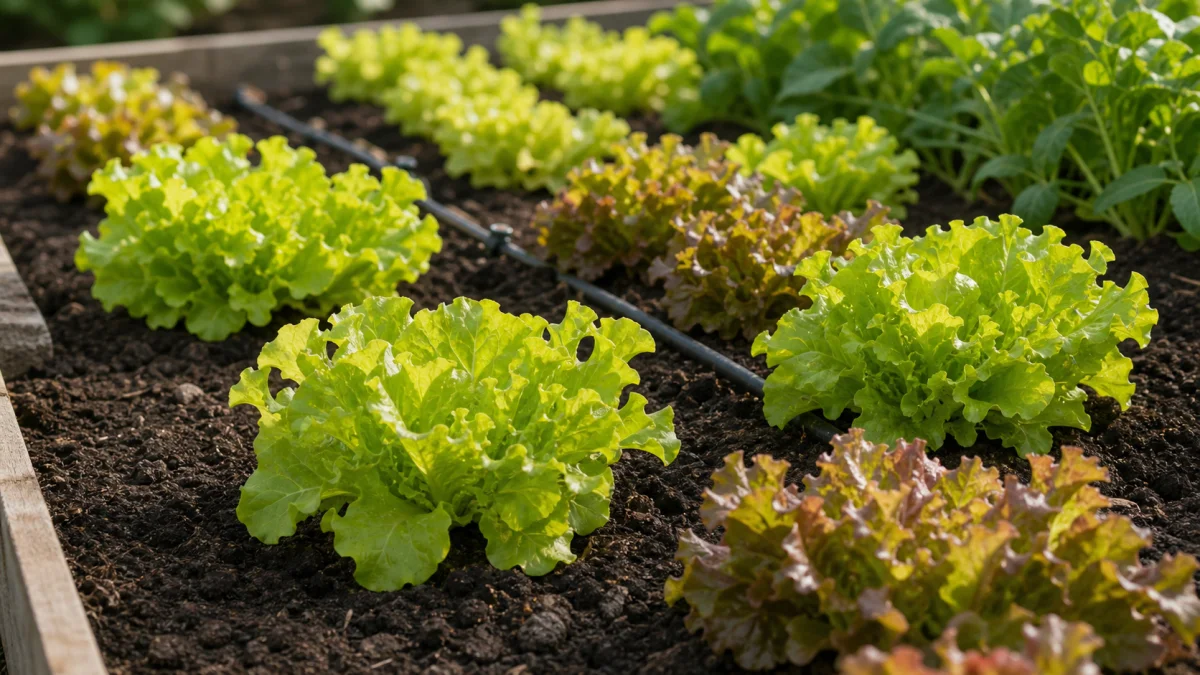
Fast crops give a small garden more room to adjust. Lettuce, radish, and other short-cycle vegetables can be sown in smaller rounds instead of all at once. This makes it easier to harvest useful leaves or roots before the bed becomes overcrowded.
Lettuce is a good example because its quality depends on timing, shade, and regular harvest rather than simply leaving plants in place for as long as possible. A practical lettuce growing guide can help compare succession sowing, warm-weather shade, and harvest timing.
Choose roots when the soil is ready for them
Root crops sound simple, but they do not forgive hard soil, uneven thinning, or late harvest. In a small bed, radish can work well because it is quick and easy to repeat in small batches. It is less useful when the soil is compacted or when too many seeds are left crowded together.
If the goal is clean roots rather than just fast germination, look at the radish growing guide before deciding how tightly to sow and when to pull the first batch.
Leave room for access, not just plants
A garden layout is not only a planting map. It also needs space for watering, checking leaves, tying stems, harvesting, and removing older plants. When every corner is planted, the bed may look efficient for two weeks and then become difficult to manage.
For a first small-space plan, keep the list short: one crop that needs structure, one quick leafy crop, and one root or short-cycle crop. After one cycle, the notes from your own bed will be more useful than a perfect plan made before planting. The same habit carries into the end of the season, when it helps to read the crop before harvest week instead of relying only on calendar dates. If the space later becomes a more permanent planting, the note on orchard drainage and access is a useful next step.

Comments
Post a Comment