Watering Is a Timing Decision, Not a Daily Habit
Watering advice often sounds simple: give the crop enough water and do not let it dry out. In a real garden or field, that is not enough. The same amount of water can help one crop recover, push another crop into soft growth, or arrive at the wrong moment for fruit quality.
A better way to think about watering is timing. What stage is the crop in? Is the root zone steady or swinging between dry and wet? Is the plant trying to recover, set fruit, fill grain, or finish harvest? Those questions make watering a crop observation habit instead of a fixed daily task.
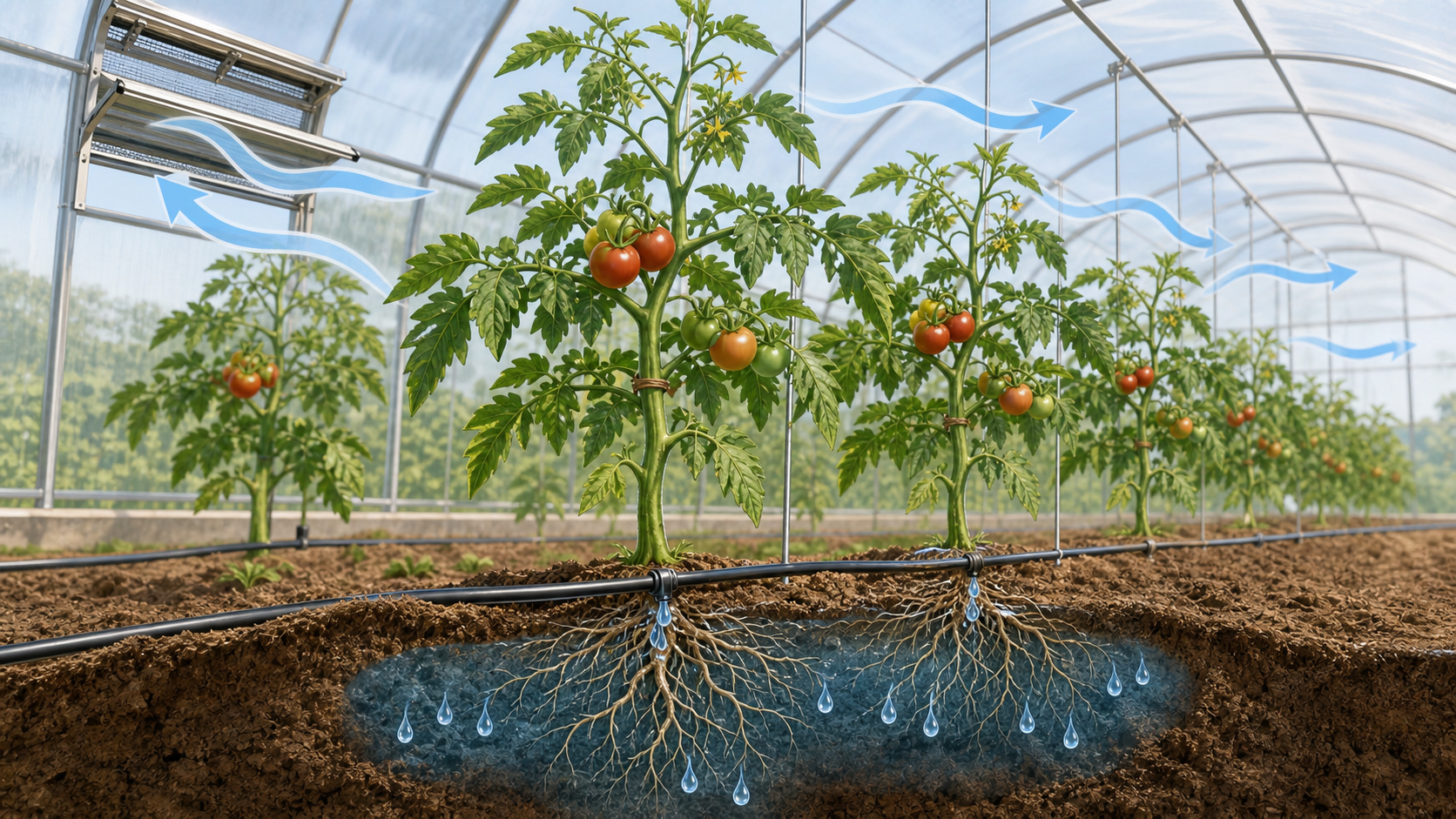
Fruit crops react to swings, not only shortages
Some fruiting vegetables do not fail because they never receive water. They struggle because the moisture pattern changes too sharply. A dry spell followed by a heavy watering, or a humid greenhouse with weak airflow, can make the crop look well cared for while fruit quality quietly becomes unstable.
Tomatoes are a clear example. Fruit cracking is not only a harvest problem; it often begins with uneven water movement, humidity, ventilation, and timing near color change. The tomato cracking and watering guide gives a deeper explanation of why steady conditions matter more than simply adding more water.
New transplants need recovery, not force
Young plants after transplanting need moisture that helps roots reconnect with the bed. That does not mean flooding the root zone every time the leaves look tired in warm weather. Wilting can come from heat, weak roots, wind, or a mismatch between leaf demand and root recovery.
For peppers, the early stage is especially important because recovery, spacing, airflow, and early flowers all affect how the first fruit load develops. A practical pepper transplant care guide is useful when the question is how to help plants settle instead of pushing them too hard too soon.
Late-season water should match the finish
Near harvest, watering decisions often become more delicate. A crop may still need enough support to finish grain or fruit, but too much late water can slow field drying, increase lodging pressure, or make harvest timing harder. The goal is not to stop thinking about water at the end; it is to change the question.
Rice shows this clearly because late-season water, grain fill, field drying, and lodging risk are connected. The rice late-season water and harvest timing guide is a good reference for thinking about water as part of finishing the crop, not just growing it.
Use watering notes to improve the next decision
The most useful watering record is usually simple. Write down when the crop looked stressed, what the soil felt like, whether the weather changed, and what happened after the next watering. Over time, those notes reveal whether the problem is timing, root-zone condition, spacing, airflow, or crop choice.
This connects naturally with the earlier note on reading the crop before harvest week, because both habits depend on observing the crop before making a calendar-based decision. If the watering problem comes from trying to fit too many crops into one bed, the note on choosing crops for limited garden space is also worth revisiting.
A steady watering rhythm is not the same as watering by habit. Good timing asks what the plant is doing today, what the root zone can hold, and what the next few days of weather may change.

Comments
Post a Comment