Sort Raspberry Canes While the Harvest Pattern Is Still Clear
After the last ripe raspberries are picked, a row can look more confusing than it did during harvest. The canes that carried fruit are still mixed with younger growth, leaves are beginning to overlap, and the places that were awkward to reach are fresh in memory but easy to forget. This is a useful moment to sort what the row has shown, before the pattern disappears under another week of growth.
The first task is not to make the row look finished. It is to identify what belongs to the harvest just completed and what needs room for the next season. A calm pass through the canes makes later decisions easier because each cane can be seen in the context of where it stood, how it carried fruit, and whether it left a workable path behind it.
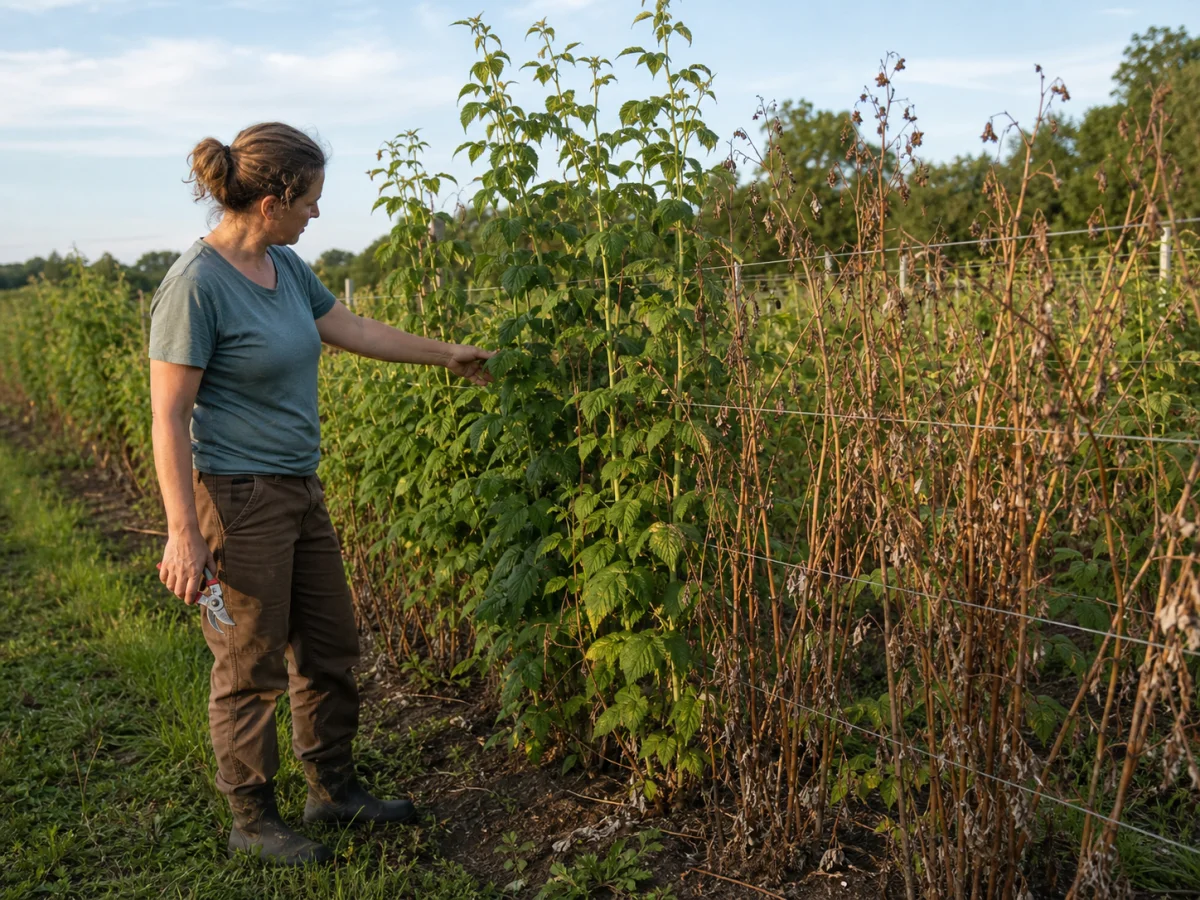
Begin where picking slowed down
Walk the row in the same direction used for harvest and pause at the places where picking became slow. Perhaps a cane leaned across the path, perhaps a cluster was hidden deep in the row, or perhaps one corner was too dense to inspect without moving several stems. These are not just harvest inconveniences. They are useful clues about what the row needs next.
This is similar to opening the canopy before it hides the work. The aim is not to make every plant look sparse. It is to keep light, access, and observation possible at the same time.
Give each type of cane a simple label
It helps to name what is being seen before making any larger change. One cane carried fruit. Another is a strong replacement cane. Another is weak, broken, or growing into the wrong space. The labels do not need to be written on tags, but naming the role of each cane slows the work enough to prevent an old fruiting cane from being confused with useful new growth.
A short field note can support that habit. Keeping small growing decisions visible is especially useful after harvest because one or two observations about crowded spots or strong new canes can guide the next visit without becoming a long record.
Keep a path beside the replacement canes
Young replacement canes need more than room to grow. They need a row that can still be approached for tying, checking, and future picking. If they are left tangled with spent canes or spread across a walkway, the next season begins with the same access problem that made the previous harvest slower.
The best path is often modest: wide enough to walk, clear enough to see the row base, and stable enough that the same route can be used again. The post on starting orchard planning with drainage and access carries the same principle. A productive row still needs a route through it.
Do not correct every difference at once
After harvest, it is tempting to remove, tie, water, and reshape everything in one pass. That can make it hard to see which change helped. A clearer approach is to sort the obvious old or damaged canes, preserve the strongest replacement growth, and leave one question for the next check. Does the path remain open? Are the new canes easy to see? Does one part of the row still hold too much moisture?
This fits naturally with resetting the next round after the first harvest. The reset works best when it turns the latest harvest into a manageable next step, not a list of unrelated corrections.
Leave the row easier to read
A good post-harvest pass does not need to solve the entire season. It should leave the old fruiting pattern clear, the younger canes easier to follow, and the work path less crowded than before. When the row can be read at a glance, later pruning and training decisions become more deliberate.
The harvest has already provided useful information. Sorting the canes while those details are still visible is a quiet way to carry that information forward instead of starting next season from memory alone.

Comments
Post a Comment