Orchard Planning Starts With Drainage and Access
Orchard planning is easy to imagine as a list of trees: apple, citrus, peach, grape, pear, or whatever looks promising in a catalog. The more useful first question is quieter. Can the site drain, can light reach the canopy, and can a person move through the planting when pruning, thinning, checking fruit, or harvesting becomes urgent?
Perennial crops stay in place long enough for small layout mistakes to become expensive. A vegetable bed can be changed next season. A poorly placed tree row or trellis can shape work for years. That is why drainage and access should be part of the first sketch, not an afterthought.
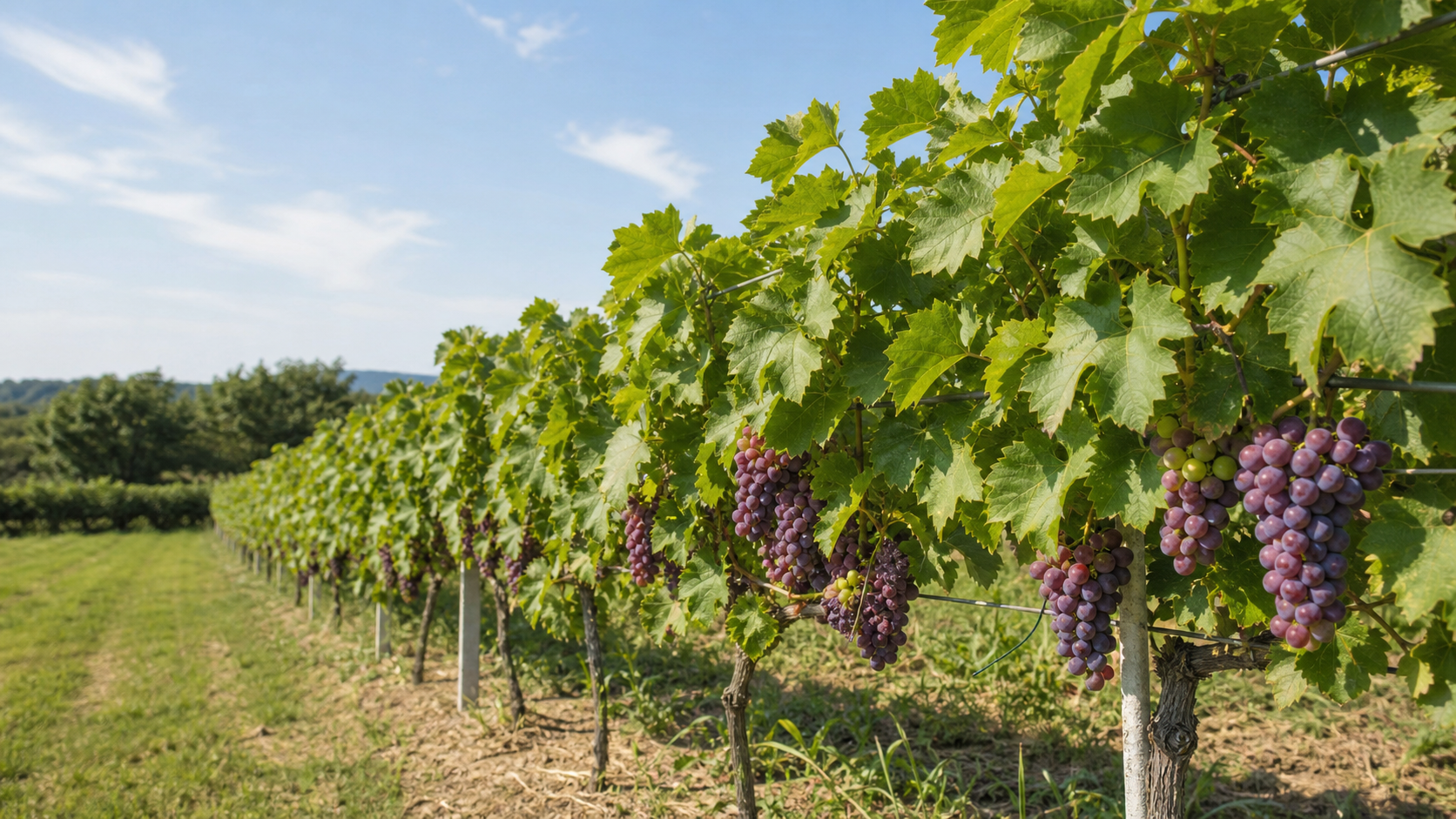
Drainage comes before variety excitement
A tree or vine can tolerate many small imperfections, but a wet root zone is harder to ignore. If water sits after rain, if equipment leaves deep marks, or if the lower part of the planting stays humid, canopy and fruit problems often become harder to manage later.
Grapes show this connection clearly. A clean trellis is not only about holding shoots upright. It also supports light, airflow, cluster visibility, and harvest movement. The grape growing guide is a good deeper reference for thinking about trellis structure, root-zone care, canopy airflow, and crop load together.
Access paths are part of plant health
Access sounds like a convenience issue, but it affects plant care. If workers cannot move through rows easily, small observations get skipped. Fruit that should be checked stays hidden. Pruning and thinning are delayed. Harvest becomes rougher because there is not enough room to handle fruit gently.
Citrus is a useful reminder because fruit quality depends on drainage, root-zone moisture, light inside the canopy, and realistic crop load. A blocked or overcrowded layout makes all of those checks less consistent. For more detail, the citrus growing guide explains why opening the canopy matters before fruit quality starts to slip.
Harvest handling should shape the early plan
It is common to plan an orchard around planting day and forget harvest day. But fruit quality is built all season and can still be lost if picking, sorting, shade, or cooling are poorly arranged. The place where fruit leaves the row should be thought about before the trees fill their space.
Apples make that point well. Tree shape, crop load, maturity checks, careful picking, and fast cooling all connect to the layout. The apple growing guide gives a broader view of how harvest handling fits with earlier tree management.
A permanent planting still needs seasonal notes
Even with a good layout, an orchard should be read during the season. Which row dries last? Which side gets shaded? Where does fruit color lag? Where is harvest movement awkward? Those notes can guide pruning, mulching, drainage improvements, and future planting choices.
The same habit applies outside orchards. The earlier note on reading the crop before harvest week is useful because it treats harvest as a field observation process, not a date on a calendar. If the planting area is still being planned, the first note on choosing crops for limited garden space is also relevant: fit and access matter before yield goals.
A good orchard plan does not need to be complicated. It should answer basic questions clearly: where water leaves, where light enters, where people walk, where fruit is handled, and how future notes will be used. Those decisions make later crop care easier to repeat.

Comments
Post a Comment