Open the Canopy Before It Hides the Work
A fruit tree can look healthy and still become hard to manage. Leaves thicken, shoots cross, fruit sets deeper inside the canopy, and the lower path slowly becomes harder to use. By the time harvest work feels awkward, the tree may already be hiding the signals that would have helped earlier.
The useful question is not whether the tree needs a dramatic pruning session. It is whether light, air, and access are still clear enough for the next few weeks of fruit sizing, checking, and picking. A small canopy adjustment made early is often easier than a large correction made after the tree has closed in.
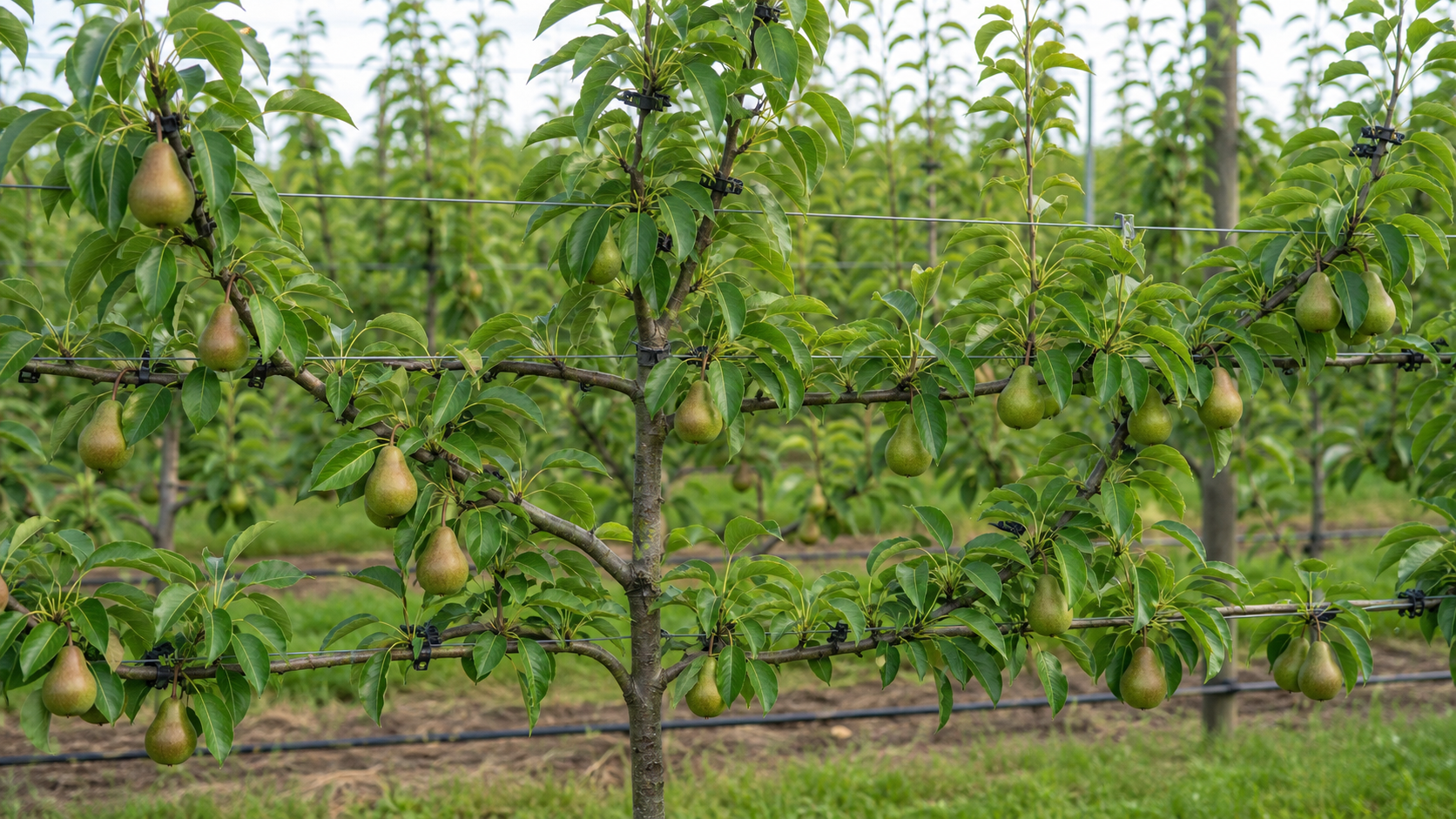
Look through the tree, not only at it
From a distance, a dense canopy can look strong. Up close, it may be blocking the view of fruit clusters, inner leaves, and weak areas. The first check should be simple: can you see through enough of the tree to understand where fruit is sitting and where new growth is crowding the work space?
This is why a repeated route helps. The note on using a weekly walkthrough to catch slow drift applies well to orchard edges, not only vegetable beds. The same path makes canopy change easier to notice.
Match pruning to fruit load
Fruit load changes the meaning of canopy work. If the tree is carrying heavily, the goal is not to remove every crowded shoot. It is to keep enough light and access around the fruit while protecting the leaves that still feed sizing and recovery.
For pears, that balance is especially important when thinning, summer shoots, and fruit position start competing for attention. The main guide on pear fruit load and summer pruning gives a more detailed frame for deciding what to open and what to leave.
Keep the picking path honest
A canopy problem often appears first as a work problem. If fruit can be seen but not reached, or if branches must be pushed aside every time the tree is checked, the harvest plan is already getting heavier. Access is part of crop care, not a separate detail.
That connects with the earlier Blogger note on orchard planning starting with drainage and access. A good orchard layout still needs seasonal checks because the tree keeps changing after the plan is made.
Open light without stripping the tree
Citrus shows why canopy work needs restraint. Removing too much useful leaf area can create a new problem while trying to solve an old one. The better target is clearer inner light, better airflow, and easier access without leaving the tree exposed.
The detailed page on citrus canopy pruning for light and airflow is a good companion when the question is how much to open without overdoing the cut.
Take a reference photo before cutting
Before making any adjustment, one photo from the same side of the tree can help. It gives the next check something real to compare: where light entered, where fruit was hidden, and whether the path stayed open after growth continued.
This is the same reason taking one reference photo before the bed changes works for smaller crops. A clear before-view keeps the next decision from relying only on memory.
The best canopy work is often quiet. Open enough to see, reach, and understand the tree. Leave enough leaf area for the fruit to finish well. Then return a week later and check whether the tree is still readable.

Comments
Post a Comment