Check the Weak Side Before the Crop Gets Heavy
A field or bed often looks steady before the crop begins to carry real weight. Leaves are upright, rows are easy to see, and the weak side may not call attention to itself yet. The problem is that support issues usually become expensive after the crop is already heavy.
A better habit is to look for the weak side early. That may be the windy edge, the wet corner, the compacted strip, the section with thinner stems, or the place where growth changed after one hard rain. These spots are small at first, but they often explain why the final stretch becomes harder.
Start with the edge that works hardest
The weakest side is not always the poorest-looking side. Sometimes it is the edge that takes wind first, the row beside a path, or the section that dries and rewets faster than the rest. Walk that area before judging the field from the center.
This is where a simple routine helps. The note on using a weekly walkthrough to catch slow drift is useful because weak sides often develop slowly enough to feel normal.
Connect growth speed with support
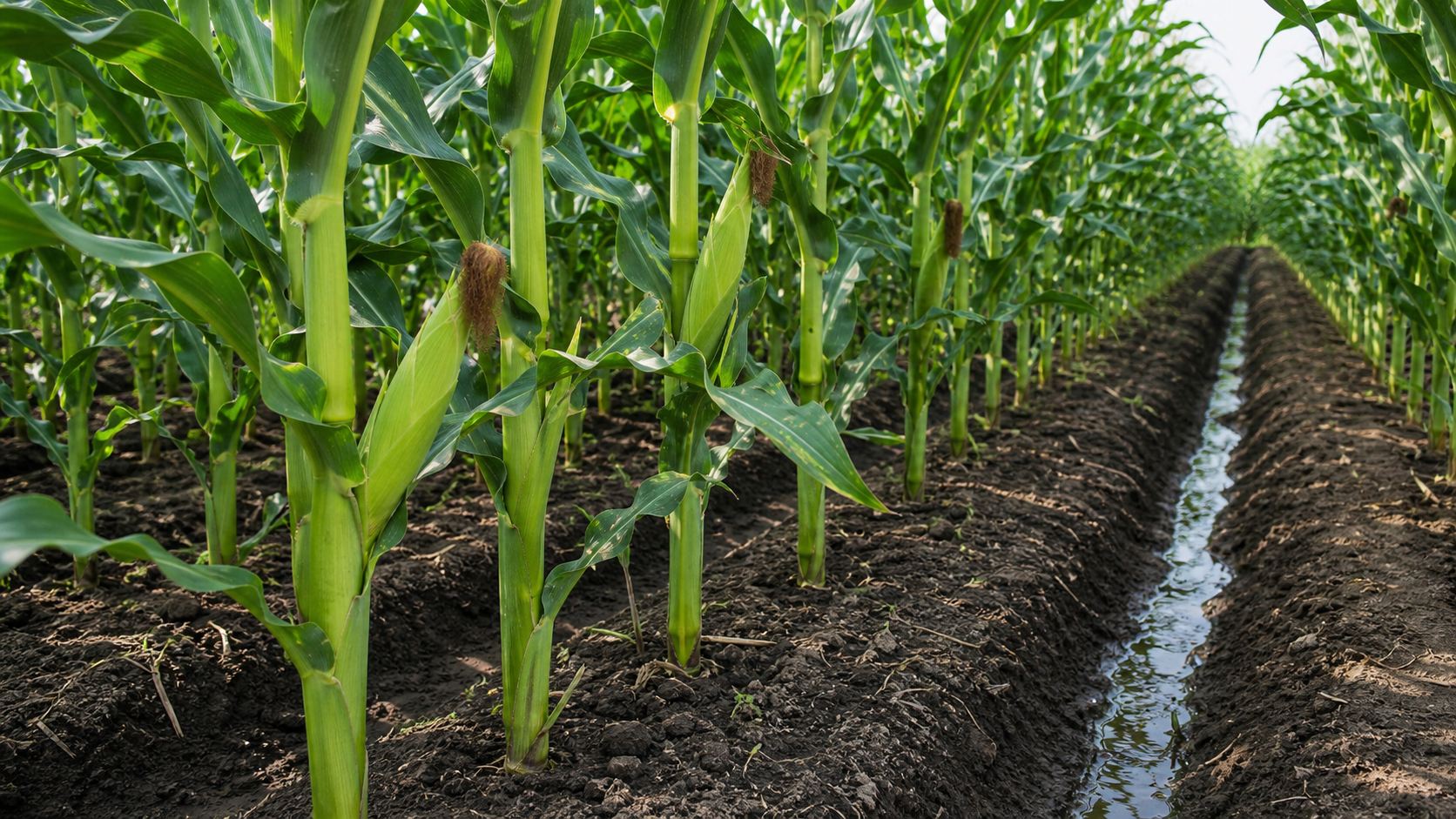
Fast growth can make a crop look strong while support is still being tested. In corn, water timing, nutrient timing, stalk strength, and later ear load are connected. If the rapid-growth period is uneven, the problem may not appear clearly until the plant has more weight to carry.
The detailed guide on corn water and nitrogen timing before tasseling is a good reference for thinking about support before the crop reaches the stage where weakness is harder to correct.
Look for zones, not single plants
One weak plant may not say much. A weak strip says more. When several plants in the same section lean, lag, or dry down differently, the question should shift from the individual plant to the zone around it. Soil, drainage, shade, traffic, or timing may be shaping the pattern.
That same zone thinking matters when pod fill begins. The page on soybean pod fill and harvest-window checks gives a practical frame for comparing different parts of a field before the final decision is rushed.
Use a photo before the lean becomes obvious
Once a section is badly leaning, the earlier pattern is hard to remember. A photo taken before the problem is dramatic can show row posture, edge pressure, and whether the same section changed from week to week.
This fits with taking one reference photo before the bed changes. The photo does not need to explain everything. It only needs to make comparison easier when the next check happens.
Let the weak side shape the next check
The purpose of finding the weak side is not to worry over every imperfect row. It is to choose the next check more carefully. If the same section stays soft, thin, or exposed, it deserves more attention before harvest timing becomes the only topic.
The earlier post on reading the crop before harvest week is a good companion here. A field is easier to read when support, growth, and weak zones are noticed before the last week forces a fast answer.
Heavy crops do not create every support problem. They reveal many of them. Checking the weak side early keeps the final decision grounded in a pattern, not in the first obvious lean.

Comments
Post a Comment