Choose Strawberry Runners Before the Bed Chooses for You
A strawberry bed can become busy before it looks crowded. New runners reach into paths, small plants begin rooting wherever they find contact, and the original planting starts to lose its clear shape. Left alone, that growth can make the bed look full while making it harder to see which plants are strong enough to carry forward.
A better approach is to choose early. Decide which runners are worth watching, which ones are only filling space, and where a young plant could settle without competing with the mother plant. The purpose is not to control every new shoot. It is to keep the bed readable enough that each retained runner has a clear reason to be there.
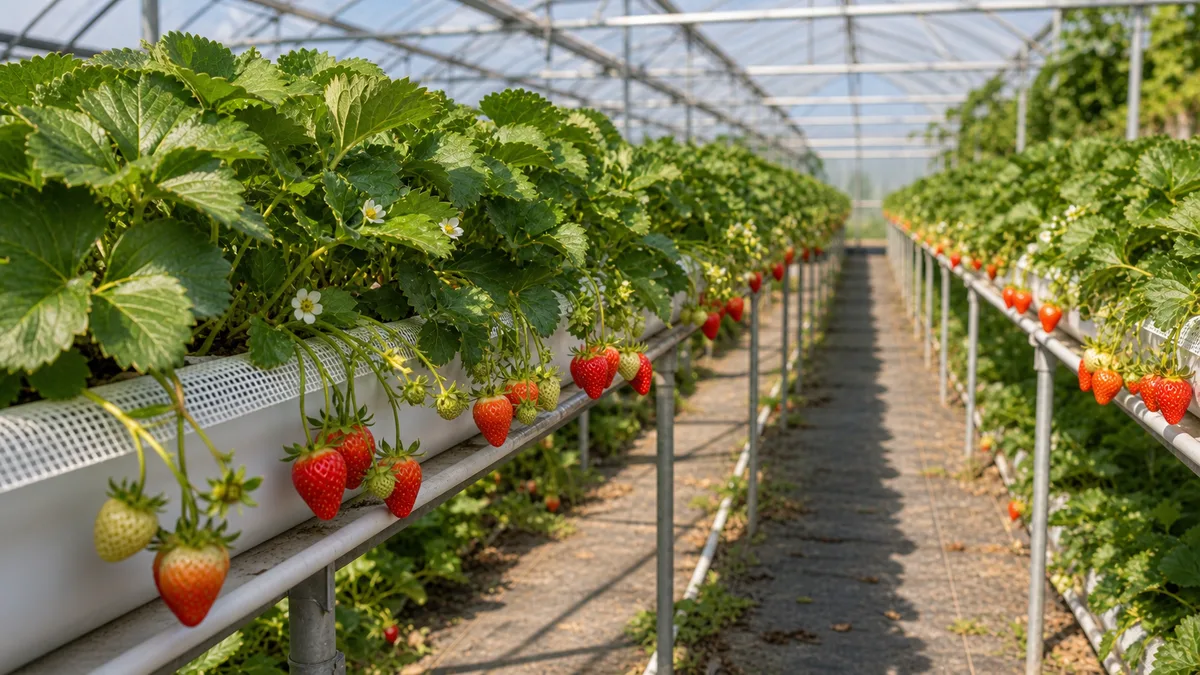
Start with the mother plant
Before paying attention to the newest runner, look back at the plant it came from. Is the mother plant standing well, easy to reach, and growing in a part of the bed that drains reasonably? A runner does not become a good candidate simply because it appeared first. Its starting point matters.
The main strawberry bed guide is helpful here because crown placement, clean ground, and a workable picking flow all affect whether the existing plants can support the next decision.
Keep only the runners you can describe
A retained runner should be easy to explain in one sentence: “This one is rooted in the open middle,” or “This one came from the strongest plant at the dry end.” That small description prevents a common problem later, when several young plants are present but no one remembers which ones were chosen intentionally.
It also makes a short record useful. Keeping small growing decisions visible does not require a long log. A date and one reason for keeping a runner are enough for the next visit.
Leave enough room around the crown
A young plant needs a place where its crown can be seen and its root area can be checked. If it is pushed into a damp edge, buried under old leaves, or tangled with too many neighboring runners, it becomes difficult to judge whether it is settling well. Space around the crown is not empty space; it is room for observation and routine care.
The guide to strawberry runners, crowns, and early root recovery gives a closer look at how young plants, bed moisture, and crown position need to work together.
Do not let a damp corner choose the next plant
Runners often root wherever they touch the ground, which is not always where a new plant should remain. A low corner can look inviting because the soil stays soft, yet it may also stay wet too long. Before treating a naturally rooted runner as a success, compare it with the rest of the bed after water has moved through.
The earlier post on checking the low spot after watering is a useful reminder that a moist place and a suitable place are not always the same thing.
Make the next group smaller and clearer
More young plants do not automatically create a stronger next round. Keeping a smaller group that can be seen, reached, and compared is often more useful than allowing every runner to take hold. The bed remains easier to water, inspect, and reset when the next group has room to show its condition.
This follows the same thinking as letting a growing plan have fewer moving parts. The choice is not about reducing the crop for its own sake. It is about giving the plants that remain enough attention to become clear decisions rather than accidental additions.
Choosing runners early gives the bed a quiet structure. The original plants stay easier to read, the new plants have a better place to settle, and the next season begins with fewer unanswered questions.

Comments
Post a Comment