The Day After Cherry Harvest Needs a Shorter Checklist
The first cherry pick can make an orchard feel finished. Containers have moved, the busiest trees look lighter, and attention naturally shifts to the next job. But the day after picking is often the best time to make a few clear observations while the tree, the fruiting positions, and the work path are still easy to remember.
This does not call for a long list of corrections. It calls for a shorter checklist: which branches were difficult to reach around, where leaves were doing the most work, which part of the row stayed damp, and what the harvest process revealed about the tree. A few useful notes made now can shape the next check far better than a general impression later in the season.
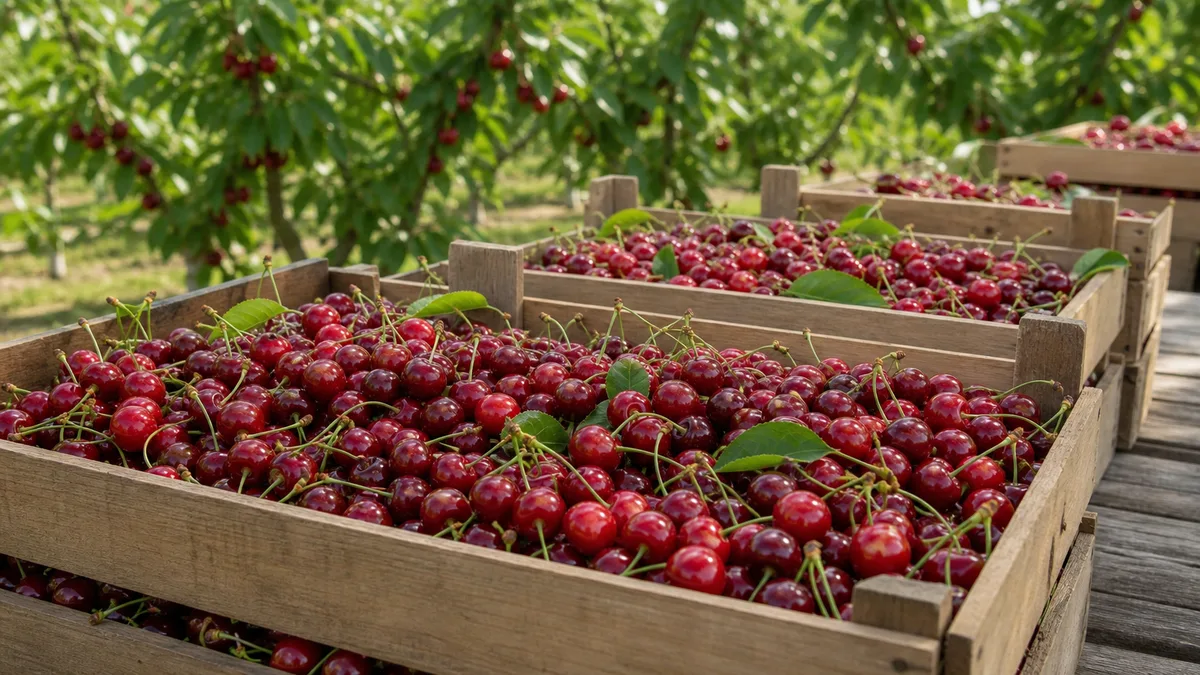
Walk the tree after the containers are gone
Once harvest containers are out of the way, a tree can be read differently. It becomes easier to see which limbs were carrying fruit, where leaves were shaded, and whether the path remained usable during the busiest work. Walk the same route used for picking and pause at the spots where the work slowed down.
The notes do not need to be detailed. One sentence about a crowded branch or a difficult turn at the row end is enough. Keeping small growing decisions visible is useful here because the important part is recording why a later adjustment might be needed, not documenting every leaf.
Let the leaves stay part of the conversation
Harvest removes fruit, but it does not end the tree's season. The leaves still need to work, and the orchard still needs to be watched for water movement, density, and recovery. It is tempting to judge the tree only by the crop that came off it, yet the condition of the canopy after picking says a great deal about the work ahead.
The main guide on cherry tree recovery after harvest gives a practical view of how leaf function, drainage, and light checks can remain connected after fruit is picked.
Clear only the access that needs clearing
A hard-to-reach cluster or a branch that repeatedly catches clothing can make pruning feel urgent. The better first question is smaller: what needs to change so the next walk through the tree is clear? A light adjustment that restores a working path may be enough. The purpose is to make the tree easier to inspect without turning a short follow-up task into a major cut.
That approach fits the earlier post about opening the canopy before it hides the work. Access, light, and leaf cover need to be considered together, especially when the fruit is no longer there to show where the work was difficult.
Use the first pick to improve the next pass
The first harvest does not need to decide everything at once. It can simply reveal a better order for the next pass. Perhaps the easier outer branches should be picked first next time. Perhaps a damp corner needs separate attention. Perhaps the container position should move so the walkway stays open. These are small operational changes, but they make repeated harvest work calmer and more consistent.
The detailed discussion of cherry summer pruning, canopy light, and picking access is helpful when the tree needs a closer look at how growth, water balance, and fruiting positions are working together.
Leave one question for the next orchard visit
Before leaving the row, choose one question that can be answered on the next visit. Is the path still open? Did the leaves hold their color after the pick? Did the damp area dry at a reasonable pace? One question keeps the next visit focused and makes the post-harvest period part of the season rather than an afterthought.
This follows the same rhythm as resetting the next round after the first harvest. A quiet review does not add more work for its own sake. It keeps the useful signals from the first pick available when the tree needs attention again.
The day after harvest can be simple: walk, notice, write one or two lines, and leave the tree easier to understand. That short checklist gives the next orchard decision a clearer place to start.

Comments
Post a Comment