Keep the Peanut Row Base Visible as the Canopy Closes
A peanut field can look comfortably full from above while the most important part of the row is becoming hard to read. As the canopy closes, the soil near the plant base disappears from view, small low spots are easier to miss, and it becomes harder to tell whether the row still has a workable zone for the crop's next stage.
A short check at the row base does not mean pulling the canopy apart. It means looking beneath it often enough to notice whether soil has sealed after rain, whether a damp patch is holding longer than the rest of the field, and whether the plant base is still easy to approach without damaging the crop. The aim is to keep the conditions near the ground visible while there is still time to respond calmly.
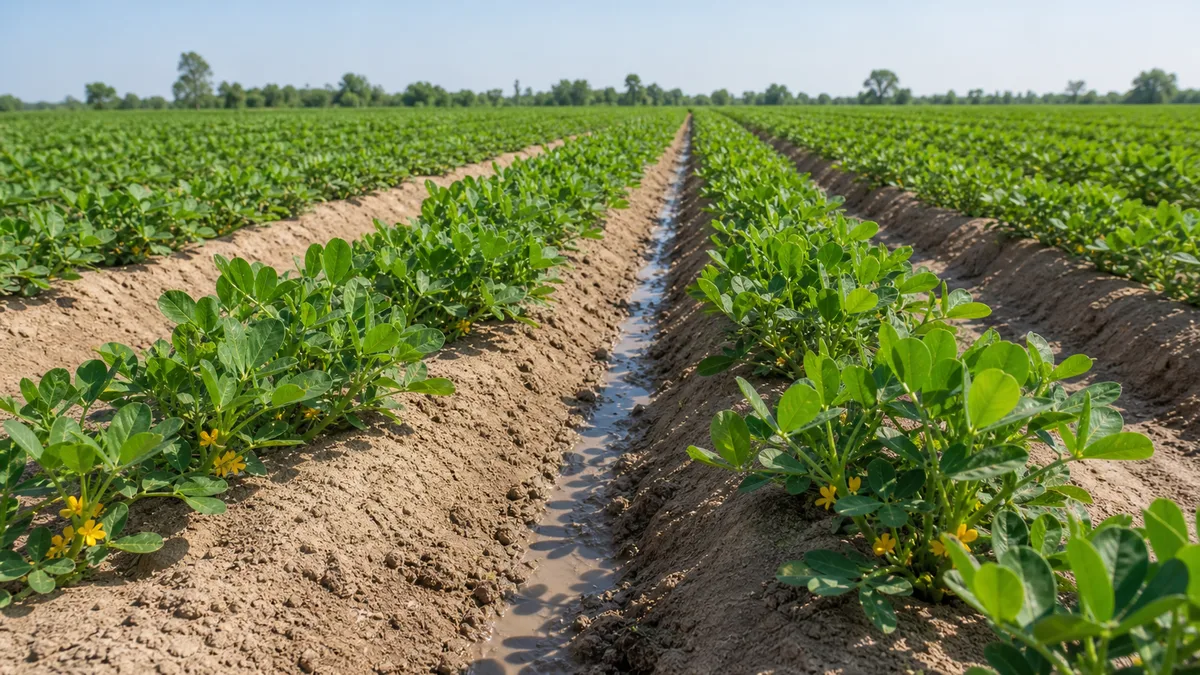
Use one small viewing point in each section
There is no need to inspect every plant. Choose one representative spot in each part of the field and return to it during normal walks. The same viewing point makes it easier to compare soil texture, moisture, canopy spread, and the openness around the plant base from one visit to the next.
This works well with a weekly walkthrough. A repeated route turns a general impression of “the field looks good” into a clearer picture of where conditions are changing.
Watch what happens after water moves through the row
Peanut rows do not always dry at the same pace. One section may have loose, workable soil while another stays darker and heavier after the same watering or rain. The difference can be small at first, but it matters when the crop needs a consistent environment near the base of the plant.
The earlier post on checking the low spot after watering is relevant here because the slowest-drying section often tells more than the average part of the field.
Keep the canopy from hiding a useful signal
A dense canopy is not automatically a problem, but it can hide the conditions that need attention. If the row base cannot be seen at all, it becomes harder to notice compacted soil, old debris, or a section where the plant is behaving differently. A gentle look from the side is often enough; the check should preserve the crop, not turn into a major disturbance.
The guide to peanut stand establishment, pegging zones, and digging timing explains why the workable soil zone beneath the canopy remains important well beyond the first stage of growth.
Match the check to the crop stage
The questions change as the field moves forward. Early on, the focus may be on whether plants are settling evenly. Later, the question becomes whether the row base, water rhythm, and canopy still leave the crop a clear place to continue its work. A field check is more useful when it asks one stage-appropriate question instead of trying to judge everything at once.
For a closer view of how flowering, pegging, and moisture decisions connect through the middle of the season, the main guide on peanut flowering, pegging, and soil moisture is a helpful companion.
Write down the section that behaves differently
When one part of the field keeps drying last, closing faster, or showing a less open row base, give it a name in the field notes. “North edge stays firm” or “middle section closes first” is enough. That short record keeps a real pattern available for the next irrigation decision, the next canopy check, and eventually the harvest plan.
This is also where treating crowding as a crop signal becomes useful. A crowded view is not only about space; it can be the first clue that a closer look at the row base is due.
Keeping the peanut row base visible is a modest habit. It gives water movement, canopy growth, and soil condition a place in the same conversation, before the field becomes too closed to read easily.

Comments
Post a Comment